
Description
Pileus 30-50 mm diam., first subglobose, expanding to parabolic to convex or umbonate, plano-convex when mature, with straight margin; when young glabrous to granulose, completely light brown to brown (7D7-8), when mature sureface breaking and leaving concolorous glabrous or granulose umbo, with concolorous squamules around umbo towards margin, on white to orange-white (5A2) background; margin with concolorous squamules and white partial veil remnants. Lamellae free, broadly ventricose, with 3 length lamellulae, up to 4 mm wide, white, crowded, with white eroded edge. Stipe 40-70 × 5-7 mm, cylindrical, with white fibrillose and light brown to brown (7D7-8) squamules at annular zone, with concolorous squamules under annular zone downwards base, on white to orange-white (5A2) blackground. Annulus an annular zone, with white fibrillose and concolorous squamules. Context in pileus white, 3-5 mm wide; in stipe hollow, concolorous with surface. Taste and smell unknown. Spore print white.
Basidiospores [50,1,1] 4.5-6.3 × 2.5-3.5 µm, avl × avw=5.02 × 3.0 µm, Q= 1.70-1.80, Qav= 1.75, in side-view oblong ovoid, in frontal view oblong, slightly thick-walled, hyaline, dextrinoid, congophilous. Basidia 18-23 × 7-10 µm, clavate, slightly thick-walled, hyaline, 4-spored, rarely 2-spored. Cheilocystidia 13-25 × 6.0-10 µm, cylindrical to irregular cylindrical, narrowly clavate to clavate, sometimes fusiform or utriform, slightly thick-walled, hyaline. Pleurocystidia absent. Pileus covering a trichoderm made up of cylindrical elements with rounded or attenuate apex, 60-170 × 7.0-13.0 µm, thick-walled, with parietal pale brown and intracellular pigment. Stipe covering of squamules similar to pileus covering. Clamp connections present.
Habitat and distribution: Growing in a small group, on humus soil mixed with dead leaves; knwon from Yunnan province of Southwest China (Zhang et al., 2019). First record from Laos in this study.
Material examined: Laos, Oudomxay Province, Xay District, Houay Houm Village, N 20° 32′ 00.67″, E 101° 53′ 48. 17.16″. 917 m., 25 July 2014, P. Sysouphanthong, PS2014-1450 (HNL503121).
Notes: Lepiota subvenenata was described from Yunnan province of Southwest China, it is closely related to L. venenata Z. H. Chen & Zhu L. Yang by morphology, and for more detail of related species were discussed in Cai et al. (2018) and Zhang et al. (2019).
GenBank numbers:
ITS: MT436258 (ITS1-F/ITS4).
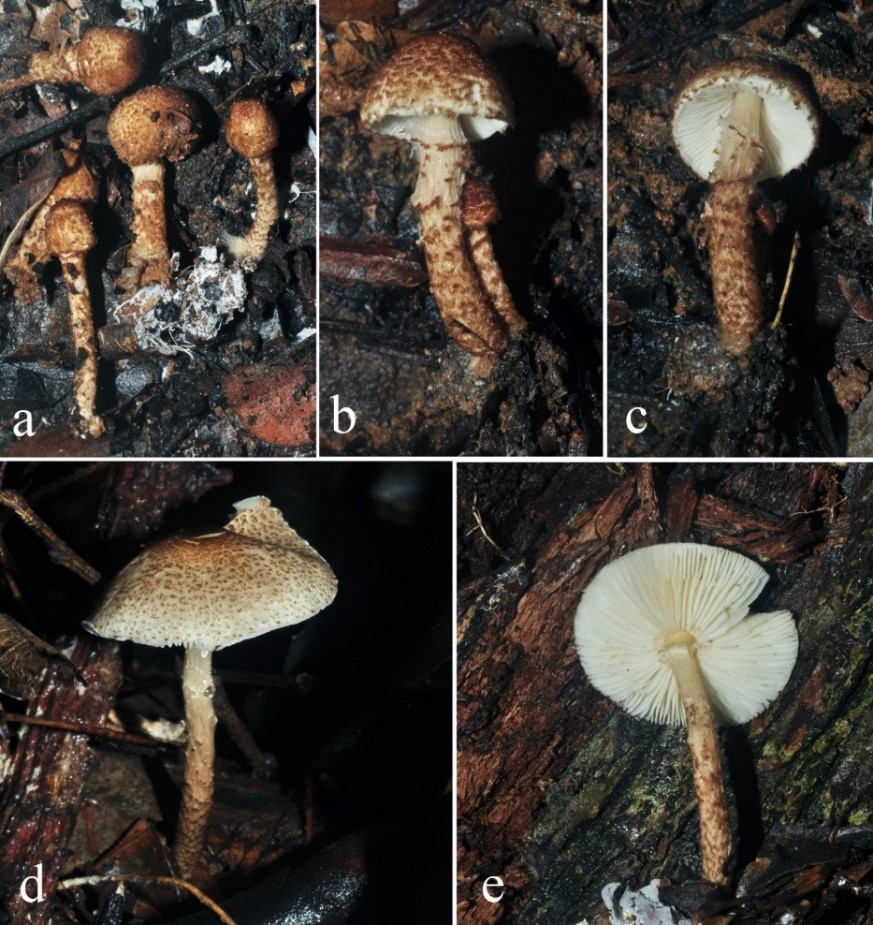
Figure 1. Lepiota subvenenata in habitat (HNL503121).

Figure 2. Lepiota subvenenata (HNL503121). a= basidiospores, b= basidia, c= cheilocystidia, d= pileus covering.