
Kirschsteiniothelia spatiosum. S. Wang, Q. Zhao & K.D. Hyde sp. nov.
MycoBank number: MB; Index Fungorum number: IF; Facesoffungi number: FoF 11801; Fig. ***
Etymology:
Holotype: X
Saprobic on decaying wood. Sexual morph: Not oberved. Asexual morph: Colonies effuse on natural substrate, scattered or fascicular, hairy, black, glistening. Mycelium partly immersed, partly superficial in the substrate, composed of pale brown, ranched hyphae. Conidiophores macronematous, mononematous, solitary or sometimes caespitose, cylindrical, wide at base, tapering towards apex, straight or slightly flexuous, smooth, light brown to dark brown, unbranched, 6–12 septate, 70–128 µm ( x̄ = 100 µm, n = 15) long, 7.5–12.5 μm ( x̄ = 9 µm, n = 15) wide. Conidiogenous cells holoblastic, monoblastic, integrated, terminal, determinate, cylindrical, smooth, mid to dark brown. Conidia acrogenous, solitary, dry, olivaceous brown to brown, pale at apex, obclavate, rostrate, smooth, straight or curved, truncate at base, 8–23– euseptate, sometimes with a mucilaginous sheath, 90–139 μm ( x̄ = 113 µm, n = 15) long, 9.5–16.5 µm ( x = 14 μm , n = 15) wide.
Culture characteristics: Conidia germinating on PDA within 24hrs at room temperature. Colonies on PDA, regular round shape, becoming filamentous in the culture, mycelium slightly raised, flattened, filiform, gray aerial hyphae, spreading from the center, becoming olivaceous-brown at the surface and olivaceous-brown to black in reverse, the surrounding color darkens PDA change to olivaceous-brown (Fig. *).
Material examined: Thailand, Chiangmai Province, saprobic on decaying wood in MRC, August 2020, Song Wang, SW280, (MFLU 21-0128, holotype), ex-type culture, MFLUCC *****.
Notes: Kirschsteiniothelia spatiosum shares similar characters with Kirschsteiniothelia tectonae in having macronematous, unbranched, cylindrical, septate, conidiophores and solitary, obclavate, septate, conidia. However, K. spatiosum differs from K. tectonae in having a gelatinous rounded sheath at the apex of shorter and thinner conidia and in having shorter and thinner conidia (90–139 × 9.5–16.5 μm vs 135–150 × 16–19 μm). Kirschsteiniothelia spatiosum differs from K. tectonae in having shorter conidiophores (70–128 × 7.5–12.5 μm vs 200 × 4–8 μm).
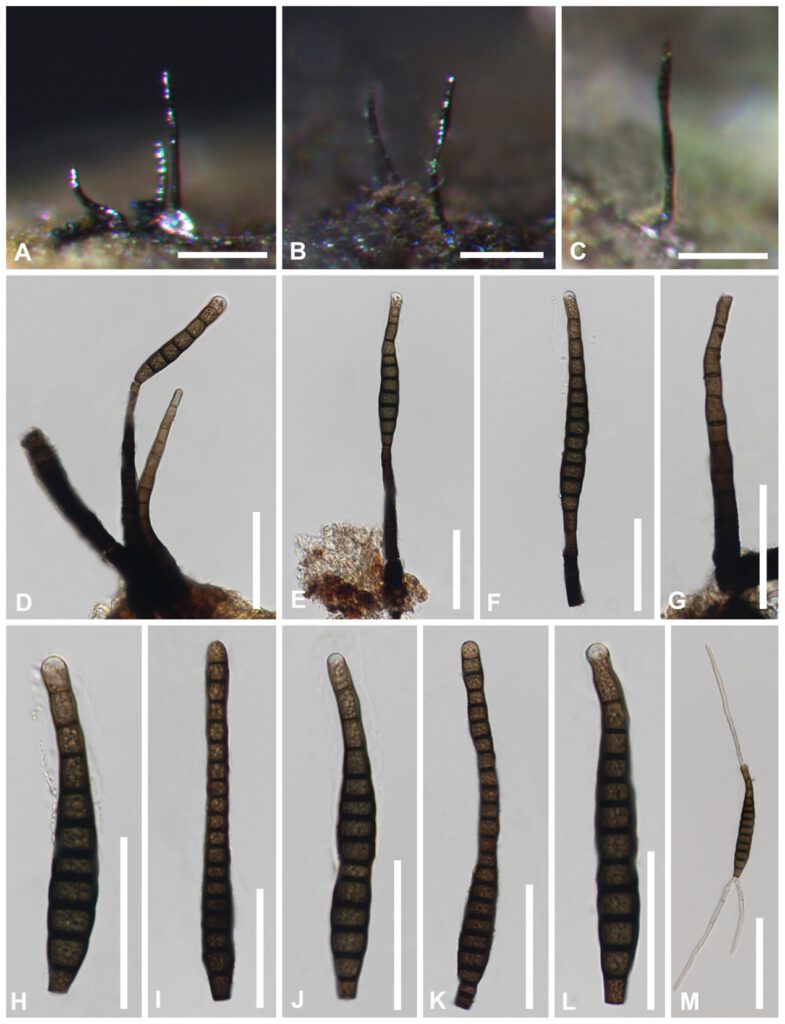
Fig*** Kirschsteiniothelia spatiosum (MFLU ****, holotype) A–C Colonies on dead wood. D,E Conidiophore with conidia. F Conidiogenous cells and conidia. G Conidiophore H–L Conidia. M Germinating conidium. Scale bars: A –C = 100 μm, D–G = 50 μm, M = 100 μm.
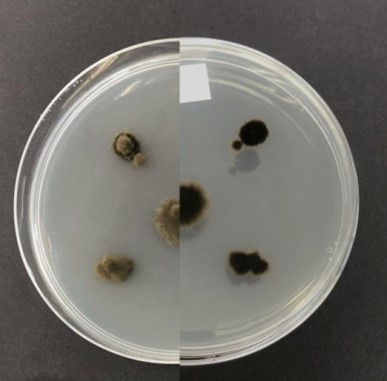
Fig.5 SW212 Culture characteristic on PDA: Kirschsteiniothelia ****(MFLUCC*****)
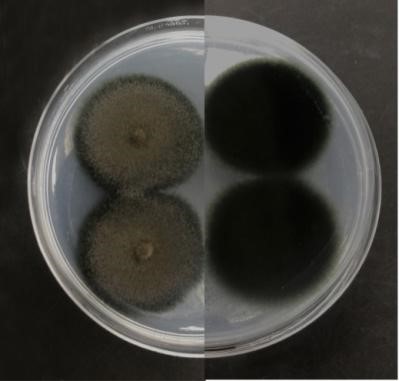
Fig.6 SW231 Culture characteristic on PDA: Kirschsteiniothelia **** (MFLUCC*****)
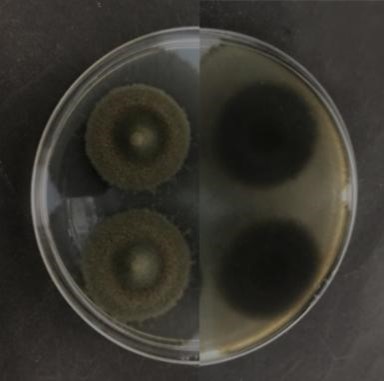
Fig.7 SW280 Culture characteristic on PDA: Kirschsteiniothelia **** (MFLUCC*****)